
RV Roof Repair & Replacement in Chino, CA
A small roof leak is the most expensive problem on an RV because of where the water goes, not what it costs to seal. By the time you see a stain on the ceiling, water has often already reached the decking and the walls. McBride's RV Service and Paint in Chino finds the source, repairs it, and reseals the roof so it stays watertight. We have served Inland Empire RV owners since 1967 and we manage insurance claims in-house when storm or tree damage is involved.
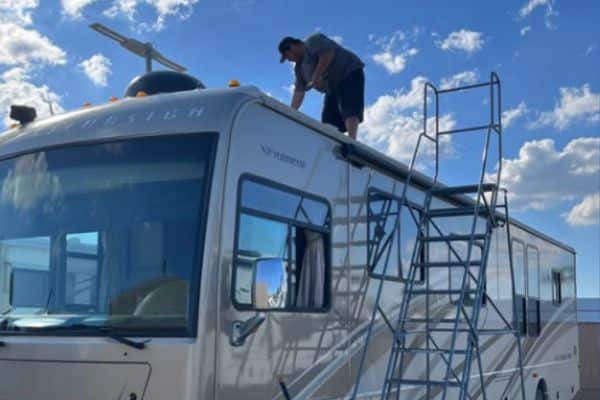
Can an RV roof be repaired, or does it need full replacement?
Most RV roofs are repaired, not replaced. If the membrane is intact and the leak is at a seam, a vent, the AC shroud, or a run of failed lap sealant, we reseal and you are done. Full replacement is the right call when the membrane is torn or delaminating across a large area, or when a leak has gone unnoticed long enough to rot the decking underneath. The way to tell is a real inspection: we walk the roof, check every penetration, and press for soft spots that signal water already in the deck. You see what we find before you decide.
What roof services do you provide?
We handle the full range of RV roof work in-house:

Leak Detection and Repair:
We trace a leak to its actual source, which is usually a penetration or a seam and not the spot where the stain appears inside. Then we repair it so it stays fixed.
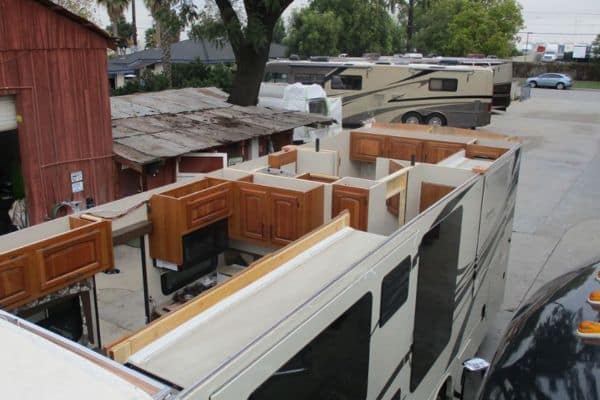
Full Roof Replacements:
When the membrane is past saving, we tear off the old material, inspect and replace any rotted decking, and install a new membrane rated for the long haul.
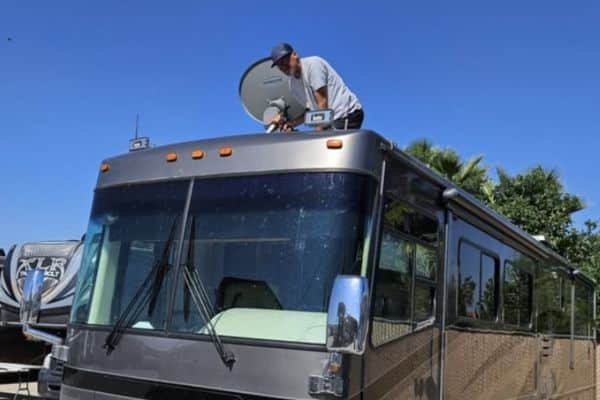
Soft-spot and decking repair:
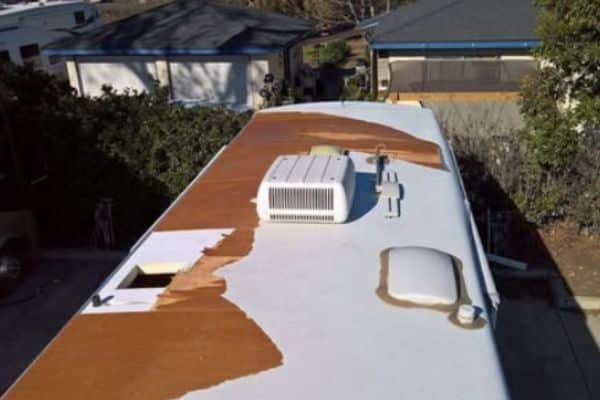
A spongy roof means water has reached the wood. We open it up, replace the damaged decking, and rebuild the surface.
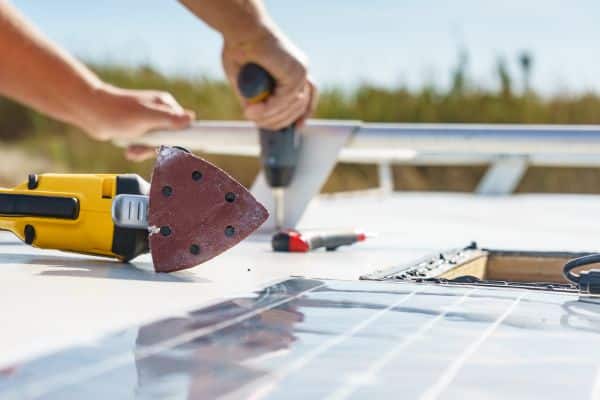
Vent, skylight, and component replacement:
Cracked vent lids and yellowed skylights are common failure points and leak paths. We replace them and seal them correctly.
Resealing and lap sealant:
Every vent, skylight, AC shroud, refrigerator vent, antenna, and plumbing stack is sealed with lap sealant that dries out and cracks over time. We strip the failed sealant and reapply self-leveling sealant on the flats and non-sag sealant on vertical edges.
How often should you reseal an RV roof in the Inland Empire?
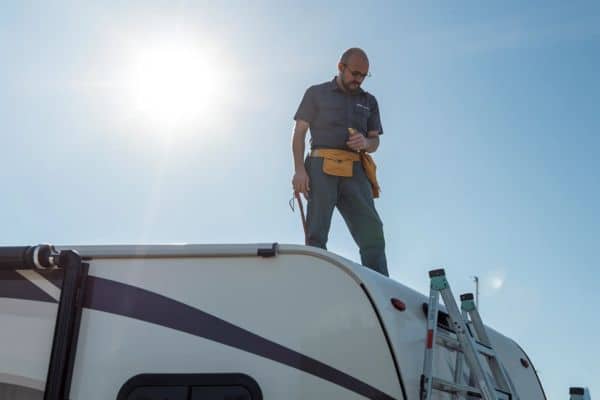
Plan on a roof inspection and a sealant touch-up at least once a year here, which is more often than the milder coastal climate to the west requires. The reason is the same sun that ages everything else in Chino, Ontario, and Rancho Cucamonga: relentless summer UV bakes EPDM and TPO membranes and dries out Dicor-style lap sealant faster than it would near the coast. Then the rare but heavy winter storm arrives, and every crack the sun opened up becomes a leak path. An RV that sits at home in the Inland Empire sun between trips, or stages at Prado Regional Park before running the 15 toward the river, earns its annual roof check.
What does an RV roof leak actually damage?
This is why we push owners not to wait. Once water gets past the membrane it follows the structure: it stains and swells the ceiling panels, runs down inside the walls, soaks the wood decking and framing until it rots, feeds mold and mildew, and can reach 12-volt wiring runs in the roof. A sealant repair that would have been a same-week job becomes interior and structural work once the water has been inside through a season. Catching it early is the entire game.
What happens when you bring your RV in for the roof?
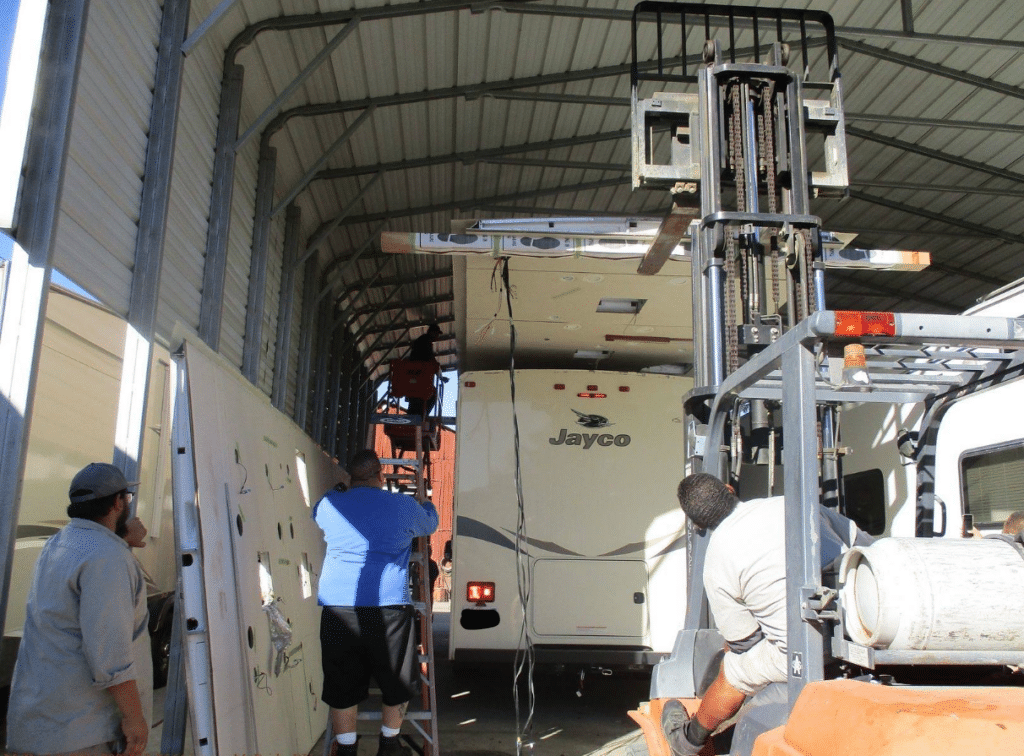
We inspect the full roof, every penetration, and the interior for any sign water has already entered. You get a written estimate that separates a reseal from a membrane replacement from decking work, so you can see exactly what the roof needs. Our estimates include a budget for parts, and the final price adjusts to the actual materials used. We use quality membrane and sealant materials and proven methods, complete the work, and water-test before the RV leaves.
Do you work with insurance on roof damage?
Yes, and roof claims are some of the most common we handle. When a storm, a fallen branch, or a low clearance damages the roof, we manage the claim in-house. McBride's works with most major carriers including AAA, GEICO, and Progressive, and is a preferred shop for GMAC and Safeco. We document the damage, work directly with the adjuster, and coordinate the roof repair with any paint and body or fiberglasswork the same incident caused.
The McBride's difference
Family-owned since 1967, McBride's is a full-service RV shop with more than 50 years in the trade. Our technicians are trained by industry manufacturers, we use quality materials, and we handle the roof alongside window, body, and house-systems work so a single leak or a single storm does not send you to three different shops. And we show you the problem before we fix it.
Hear From Our Satisfied Customers


They are always professional, courteous and they have resolved any and every issue I had.







Frequently Asked Questions
How much does RV roof repair cost?
A reseal or a single-penetration leak repair is the most affordable and most common job; a full membrane replacement with decking work is the high end. We give a written estimate first that separates the reseal, the membrane, and any decking, with a parts budget that adjusts to the actual materials used.
How do I know if my RV roof needs to be resealed or fully replaced?
A reseal handles cracked lap sealant and isolated leaks when the membrane is sound. Full replacement is for a torn or widely delaminated membrane, or for a roof where water has already rotted the decking. Our inspection, including a check for soft spots, tells you which one you are looking at.
How often should I reseal my RV roof?
In the Inland Empire, plan on an annual inspection and sealant touch-up. The high UV here dries lap sealant out faster than milder climates, and a small touch-up each year is far cheaper than the water damage a skipped year can cause.
What kinds of RV roofs do you work on?
We service the common RV roof types including EPDM rubber, TPO, fiberglass, and aluminum, and we reseal all the standard penetrations: vents, skylights, AC shrouds, refrigerator vents, and plumbing stacks.
My ceiling has a water stain. Is it too late for a simple repair?
Not necessarily, but do not wait. A stain means water is already past the membrane. If it is caught early it may still be a reseal plus minor interior work; left for a season it can become decking and structural repair. Bring it in for an inspection so we can find the source.
Do you handle RV roof damage through insurance?
Yes. We manage roof claims in-house, work with most major carriers, and are a preferred shop for GMAC and Safeco. We deal with the adjuster directly and coordinate any related body or fiberglass work.
A roof leak that has run for a season often shows up as a soft spot in the floor. See RV floor repair and delamination.
Schedule your roof inspection
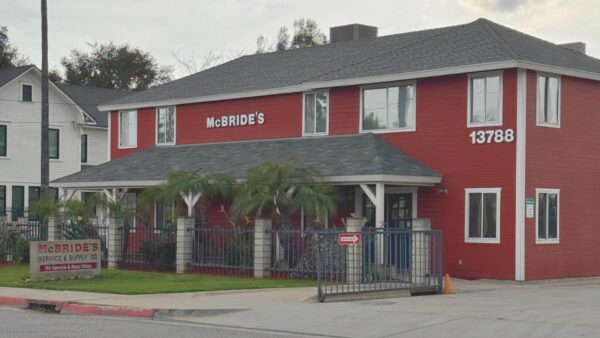
Call (909) 627-7566 or request an appointment online. We are located at 13788 Oaks Ave in Chino and serve RV owners across the Inland Empire.
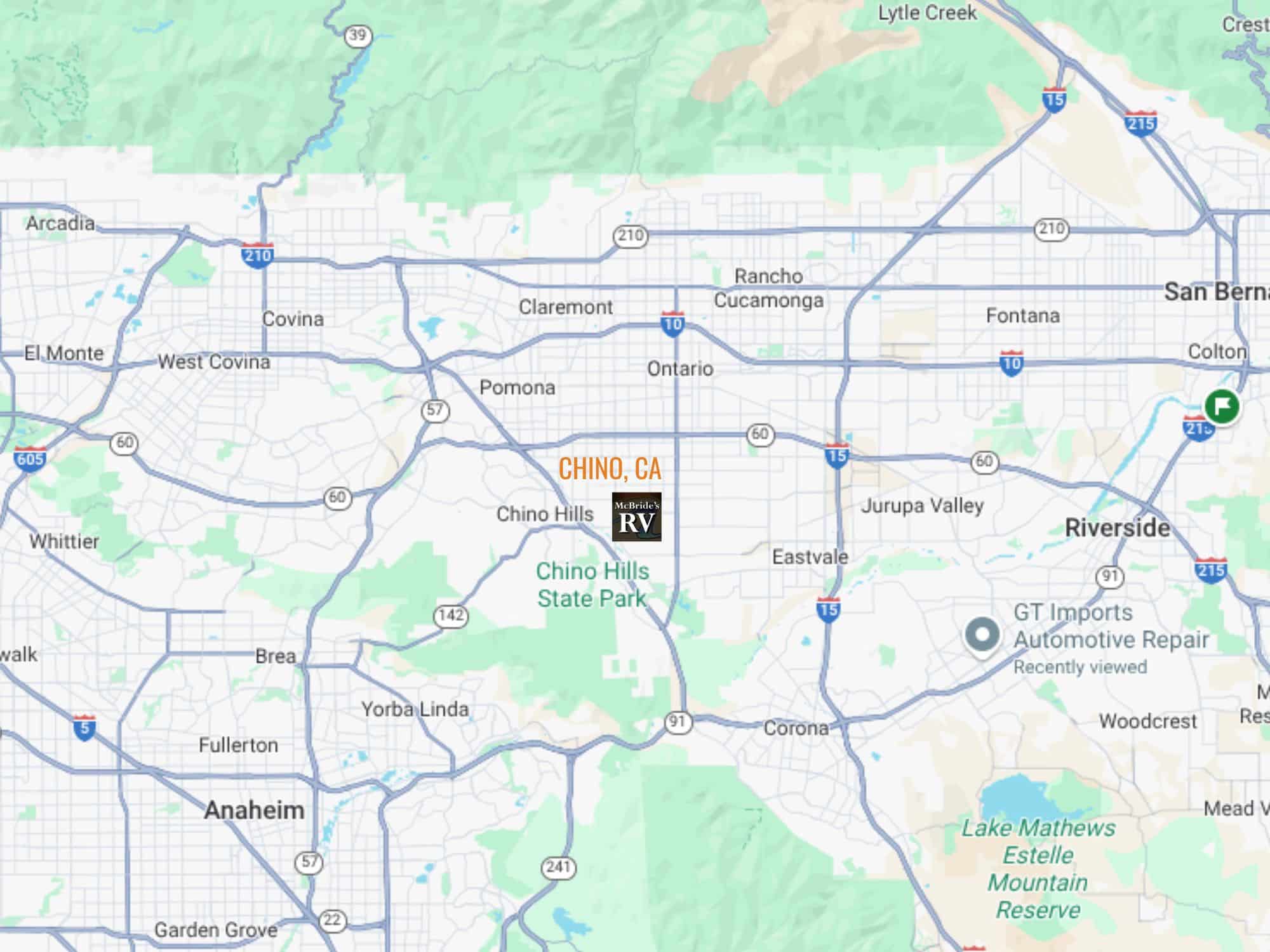
Our service areas
- Norco
- Corona
- Rancho Cucamonga
- Pomona
- Walnut