
RV Maintenance Services in Chino, CA
Most RV repairs are maintenance that ran past its date. A roof that should have been resealed last summer becomes a soft floor by fall, a generator that never sees a load run starts varnishing the carb, an anode rod left in for four years lets the water heater tank corrode through, and the heat-cracked AC shroud nobody noticed becomes a leak path at the roof membrane. McBride's RV Service and Paint in Chino is the in-shop maintenance home for Inland Empire RVs: a single place where the chassis side and every house system on the coach get serviced on a real schedule by the same people. Family-owned since 1967.
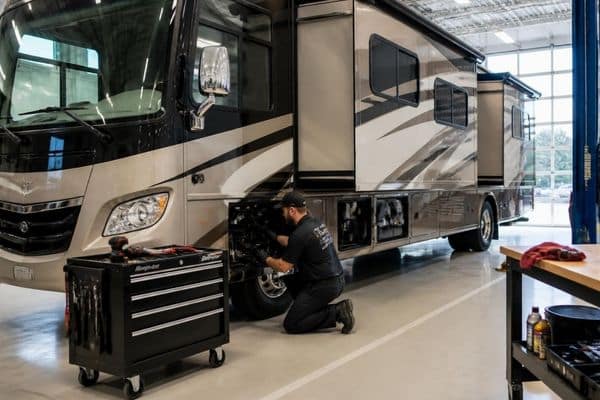
What does RV maintenance actually cover?
An RV is two vehicles stacked on top of each other, and both halves run their own schedule.
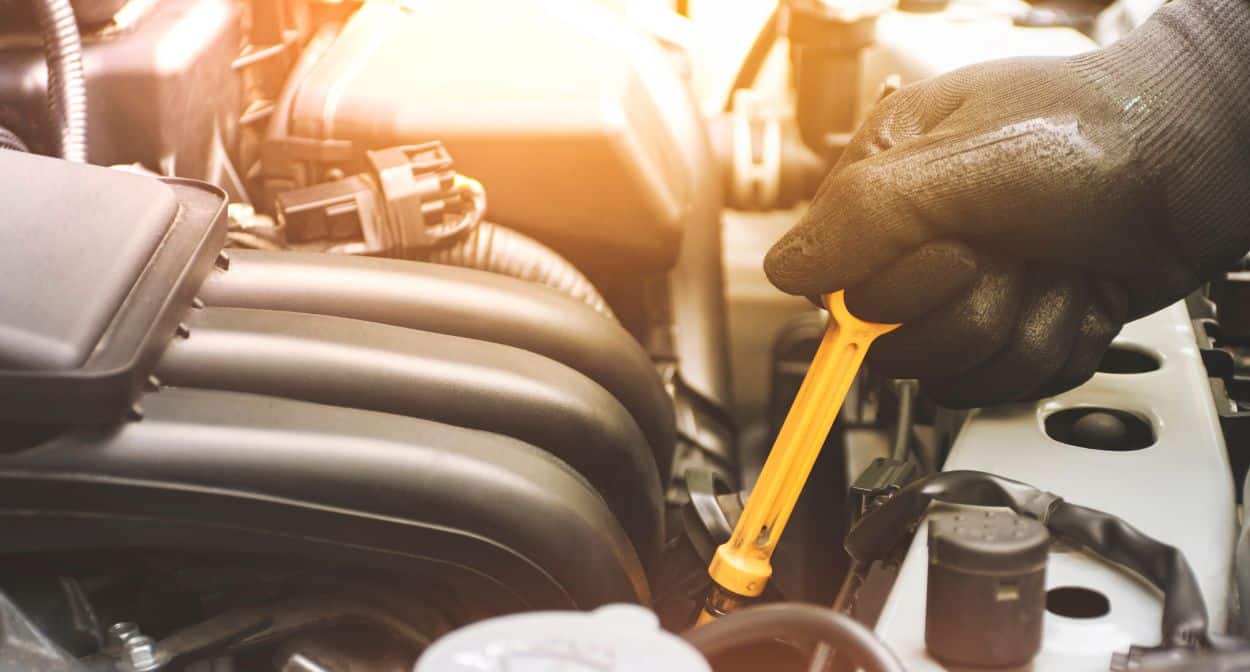
The chassis side is the running gear: engine oil and filter, transmission service, chassis lubrication, brakes, wheel bearings, fuel and air filters, cooling-system flush, suspension and steering. Most of this lives on the RV chassis repair and maintenance page, which carries the detail on Class A diesel-pusher and gas Class A/Class C service packages, the Ford F53, Freightliner, Workhorse, and Spartan-certified work, and the minor-and-major-service intervals.
The house side is everything that makes the coach livable: the roof and its sealant, the air conditioning, the refrigerator, the water heater or Aqua-Hot, the plumbing and tanks, the slide-outs, the generator, the batteries and 12V electrical, and the appliances. None of these share a service schedule with the chassis side, and most of them quietly drift out of spec between trips. This page is the parent that organizes the whole picture.
We service both halves under one roof so the coach leaves road-ready, not partially sorted.
How often should you service an RV?
There is no single number, because an RV runs on hours, miles, and calendar time at once. Here is the rough cadence we keep Inland Empire coaches on.
Monthly, all year, on every coach
Run the generator about two hours under a real load (the cabin A/C running, not a no-load idle); load-check the house and chassis batteries; walk the roof for cracked sealant before the next storm window.
Pre-trip, before any real run
Tire pressures and tread; the wheel bearings if you can hear them; the brakes; the house battery state of charge; the A/C on shore power and on the genset; the water heater and plumbing pressure-tested; the slide-outs lubed and rolled in and out; the cabin smoke and propane detectors. A pre-trip is the fifteen-minute version of everything below.
Twice a year on a frequent-use coach, once a year on a weekend coach (the chassis minor and major service intervals)
Engine oil and filter, chassis lubrication, full fluid top-off, belts and hoses inspected, brakes inspected. The annual version adds fuel filter, air filter, radiator-cap pressure test, and front-wheel-bearing service. The chassis page has the full Class A diesel-pusher and gas-coach service packages.
Annually on the house side
Roof inspection and sealant touch-up (UV here ages Dicor-style sealant faster than coastal climates, so an annual touch-up is a different calendar than the manufacturer's national one); A/C coil and fin clean; refrigerator vent and cooling-unit check; water heater anode rod pulled and replaced if it is half gone; the Aqua-Hot diesel side serviced on its hour interval; slide-out seal inspection and rail lubrication; generator service on the manufacturer interval, commonly around every 150 hours or once a year on the gas sets; battery wet-cell check or AGM state-of-health test.
Seasonally
Winterize the plumbing and the standard water heater before any trip up the 15 over the Cajon Pass or the 18 toward Big Bear, even when Chino itself stays mild; sanitize the fresh-water system at the start of camping season.
We build a custom schedule against how you actually use the rig and bring you in at the right times rather than the wrong ones.
Why does Inland Empire climate set a different maintenance schedule than the manufacturer wrote?
The intervals in most RV owner's manuals are written nationally. Two local conditions push the real cadence faster here.
Heat and UV. Summers in Chino, Ontario, and Rancho Cucamonga run long stretches above the rating most house systems were designed for. UV dries out lap sealant on the roof, cures rubber slide-out seals, bakes AC capacitors, and breaks down gasoline in a stored generator's carburetor. Annual roof reseal touch-ups, annual A/C service, and the monthly genset load run are not optional in this market; they are the maintenance baseline.
Hard water. Chino, Chino Hills, and Ontario draw mineral-heavy groundwater, and that scale shortens the life of the water heater, packs the city-water pressure regulator, fouls the tank level sensors, and crusts the inlet screens. The anode rod that lasted four years on the coast goes in two here, and the tank flush nobody bothered with last summer is what keeps the heater alive next year. We treat hard water as a design factor for the maintenance schedule.
The third factor is sit time. Inland Empire owners store the rig more weeks of the year than they use it, often in a lot off the 60 or out toward Mira Loma, and the long sit is what turns a healthy system into a no-start come spring. Monthly load runs and quarterly walk-arounds beat the annual cleanup every time.
How does scheduled maintenance differ from repair?

Maintenance is on a calendar. Repair is on a fault. The same shop can do both, and the goal of maintenance is to make sure the repair phone call never has to be made. If something on your coach is already failing — a leak, a no-start, a no-cooling, a soft floor, a chassis vibration — that is a repair, and it routes to the relevant service page rather than this hub. If everything is working and you want it to keep working through the summer and the Anza-Borrego trip in October, that is maintenance, and that is what this page covers. Tell us what state the coach is in and we route the appointment to the right side of the shop.
What does an annual RV maintenance visit cost?
The visit is built from the items on the schedule above, not from a single flat number. A chassis minor service is the affordable end; a full annual that pairs chassis oil and filter, the annual house-system run-through, generator service, anode rod, and roof reseal touch-up is the comprehensive end. Every estimate names a parts budget that adjusts to the actual parts your coach turns out to need, and nothing is done until you approve the number. We are upfront about what is due now and what can wait, because the goal is keeping the rig road-ready, not selling shop hours.

What happens when you bring your RV in for maintenance?
We start with a walk-around with you: tires, exterior, slide-out seals, roof, AC shrouds, fluid puddles, batteries. We pull stored fault codes on the chassis side and on the generator where the unit supports them. We test the A/C and the refrigerator on every power source the coach uses. We pressure-test the plumbing and look at the water heater anode rod. Then you get a written punch list grouped into "due now," "due soon," and "due at the next service," with a budget against each line. You pick what gets done this visit, and you see the parts that were replaced before they go in the recycling bin.
The McBride's difference
Family-owned since 1967, McBride's runs an in-shop, full-systems RV facility. We are factory-certified to service Workhorse and Spartan chassis, a Cummins Onan authorized service center on the generator side, a factory-authorized service center for Dometic and Coleman on the cabin A/C, and a factory-authorized service center for Aqua-Hot on the heat-and-hot-water side. One shop, one calendar, one record of what was done last time and what is due next. And we show you the problem before we fix it.
Frequently Asked Questions
What is the difference between RV maintenance and RV repair?
Maintenance is scheduled, preventive work on a healthy coach (oil at interval, anode rod at interval, roof reseal at interval). Repair is fault-driven work on something that has already failed. Tell us which state the coach is in and we route the appointment correctly.
How often should I have my RV maintained?
There is no single answer. Chassis minor service runs every six months on a high-use coach and once a year on a weekend coach; the annual house-system service runs once a year on most rigs in Inland Empire heat. We build a schedule against your actual use rather than against a national average.
Can you maintain both the chassis and the house systems in one visit?
Yes. That is the point of an in-shop facility, and most of our annual customers bundle the chassis service, generator service, A/C and refrigerator checks, water heater anode rod, and roof reseal touch-up into one drop-off.
What is on a pre-trip RV check?
Tires and pressures, brakes, wheel bearings, batteries, A/C on shore power and genset, water heater and plumbing pressure-tested, slide-outs lubed and rolled, propane and smoke detectors tested. The fifteen-minute version of the annual checklist.
Do you service Workhorse, Spartan, Ford, and Freightliner RV chassis?
Yes. McBride's is factory-certified on Workhorse and Spartan and has decades of experience on Ford F53 and Freightliner RV chassis. Chassis depth is on our RV chassis repair and maintenance page.
How much does RV maintenance cost?
The visit is built from the items due on your schedule, not a flat number. A chassis minor service is the affordable end; a full annual that combines chassis, generator, house systems, and roof is the comprehensive end. Every estimate names a parts budget that adjusts to the actual parts your coach needs.
Do you service my coach if it is in storage?
Yes, and we recommend a quarterly visit on a stored coach. The long sit between trips is what creates most of the spring no-start work; a quick run-and-load on the generator, a battery check, and a roof walk-around prevent the bigger bills.
Hear From Our Satisfied Customers





They are always professional, courteous and they have resolved any and every issue I had.





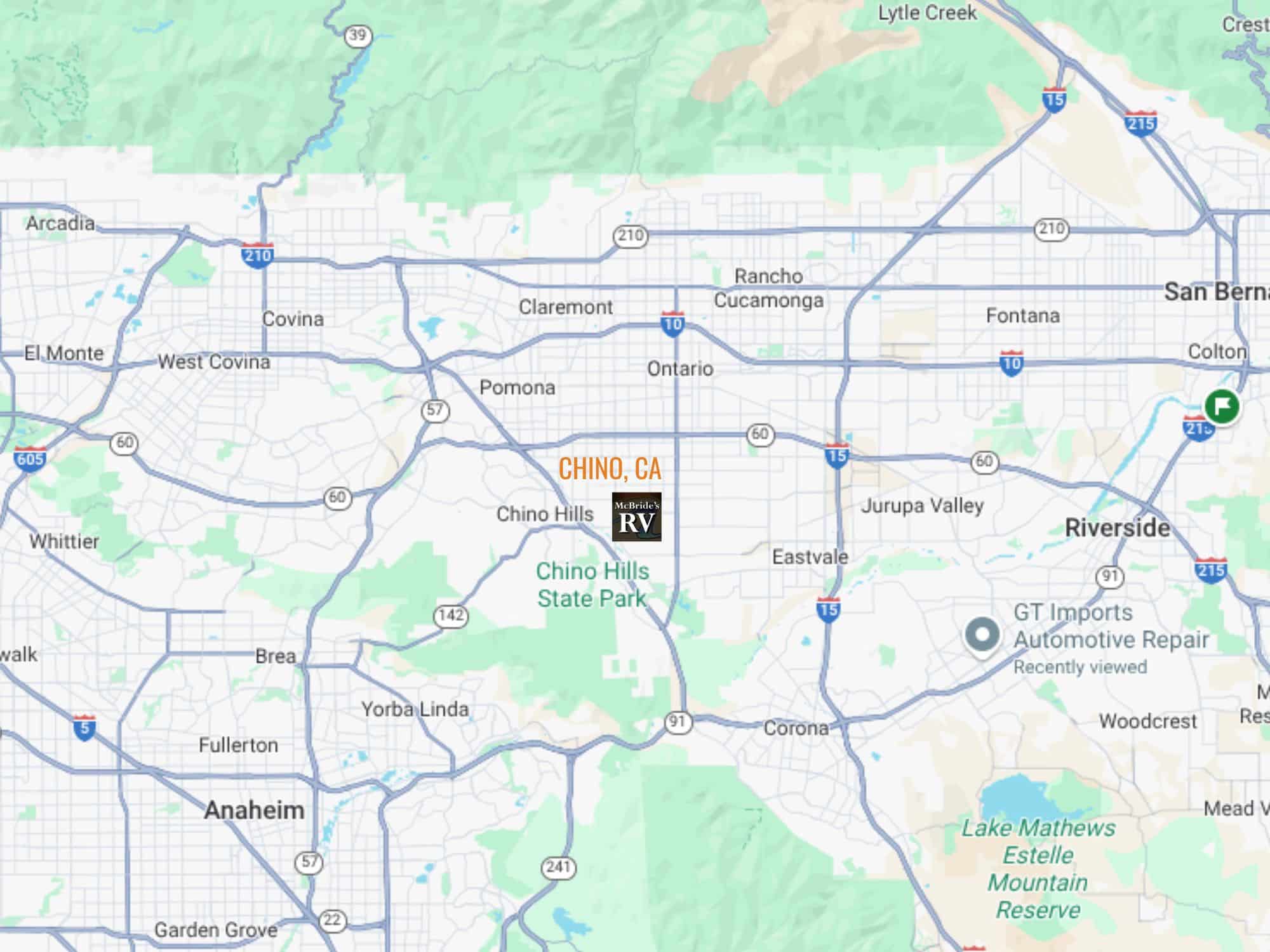
Our service areas
- Norco
- Corona
- Rancho Cucamonga
- Pomona
- Walnut
- Upland
Schedule your RV maintenance service
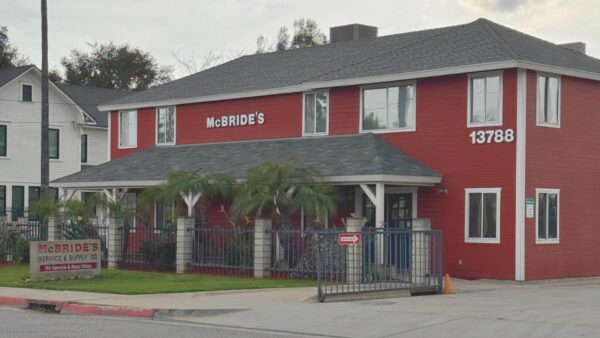
Call (909) 627-7566 or request an appointment online. We are located at 13788 Oaks Ave in Chino and serve RV owners across the Inland Empire.